Life in Delhi: Lifestyle, Traffic, Pollution, Housing and the Daily Commute
A practical guide to everyday life in Delhi — lifestyle, traffic, air pollution, housing affordability and commuting, and how to plan around them.
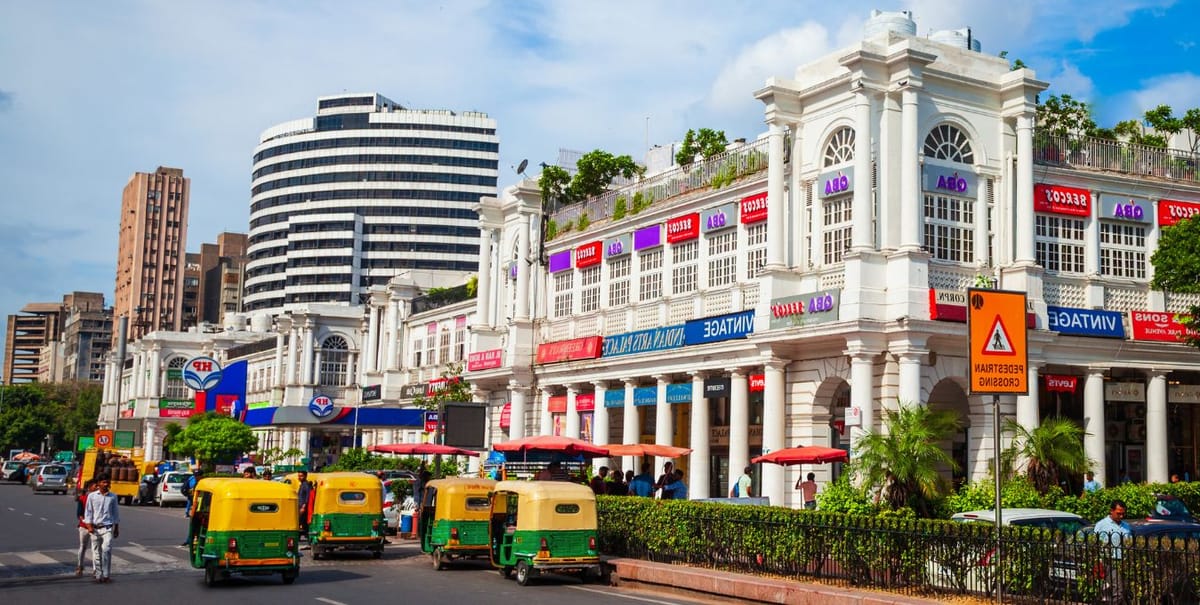
City Life · India

What is everyday life in Delhi really like? India's capital offers extraordinary food, culture, career opportunities and neighbourhoods full of character. Yet living here also means navigating heavy traffic, seasonal air pollution, rising housing costs and long commutes.
For some people, Delhi is a city of ambition and opportunity. For others, its crowds and fast pace can be exhausting. The experience often depends on where you live, where you work, your budget and how you get around.
In this guide, we explore five things that shape life in Delhi: lifestyle, traffic congestion, air quality, property affordability and commuting.
The big picture
Delhi offers a rich urban lifestyle, but its everyday advantages come with practical trade-offs. Choosing the right neighbourhood and planning around transport, housing and air quality can make a significant difference to daily life.
1. Lifestyle in Delhi: Energetic, Diverse and Always Moving
Delhi's lifestyle is shaped by its mix of history, migration, business, education, government and entertainment. Traditional markets exist alongside modern shopping centres, cafés, office districts and residential high-rises. A single day might involve a metro ride to work, lunch at a neighbourhood restaurant and an evening exploring a historic monument or meeting friends.


Food, culture and social life
Food is one of Delhi's defining attractions. From chaat, parathas and kebabs to regional Indian cuisines and international restaurants, there is a remarkable variety of places to eat. Markets and local food streets are not simply places to shop; they are also social spaces where people meet, browse and spend time together.
The city also has a strong cultural identity, with historic sites, museums, theatres, festivals, religious places and a busy calendar of events. For residents who enjoy exploring, there is rarely a shortage of things to do.
Work, family and the pace of life
Delhi attracts students, professionals, entrepreneurs, civil servants and families from across India. That diversity creates opportunities and exposes residents to different languages, cuisines and traditions. At the same time, long working days, crowded roads and extended travel times can reduce the time available for family, exercise and leisure.
Neighbourhood choice matters. Some areas feel lively and densely packed, while others offer gated communities, parks or quieter residential streets. The experience of living in Delhi is not the same everywhere.
2. Traffic Congestion: The Cost of Getting Around
Traffic is one of the most visible challenges of daily life in Delhi. Cars, buses, motorcycles, auto-rickshaws, delivery vehicles and pedestrians share a road network that becomes particularly busy around office hours and major junctions.
According to the TomTom Traffic Index for New Delhi, average congestion reached 60.2% in 2025. A typical 10-kilometre drive took about 24 minutes and 28 seconds on average, while rush-hour travel could take considerably longer.
These are city-level estimates, not a promise of how long any individual journey will take. Actual travel times depend on the route, time of day, weather, roadworks and incidents.
Why traffic affects quality of life
- Unpredictable journeys: A trip that seems short on a map can take much longer during peak periods.
- Stress and fatigue: Repeated stop-start driving can make the workday feel longer.
- Higher travel costs: Fuel, parking and ride-hailing expenses can add up.
- Environmental impact: Congestion contributes to transport emissions and can worsen exposure to roadside pollution.
For many residents, the practical answer is not simply to find a faster car route. It is to reduce the number of journeys that depend on driving, travel outside the busiest periods where possible, or choose a home closer to work and reliable public transport.
3. Pollution and Air Quality: A Major Quality-of-Life Issue
Air pollution is one of Delhi's most serious environmental challenges. Residents may notice clearer conditions during some parts of the year and much worse air during the colder months, when weather patterns can limit the dispersion of pollutants. Conditions vary by season, location and day, so one reading cannot describe the city's air quality year-round.
Fine particulate matter, known as PM2.5, is especially important because these tiny particles can penetrate deep into the lungs. Sources of pollution across Delhi and the wider region include vehicle emissions, road and construction dust, industrial activity, waste and fuel burning, and seasonal factors affecting pollution across northern India.
What do the latest annual figures tell us?
India's Ministry of Environment, Forest and Climate Change reported that Delhi's annual average PM2.5 concentration was 97 micrograms per cubic metre (µg/m³) in 2025. The figure was lower than the annual averages reported for 2021–2024, but it still indicates a substantial air-quality burden.
Source: Government of India, 2 January 2026.
It is important to distinguish between PM2.5 concentration and the Air Quality Index (AQI). PM2.5 measures the amount of fine particulate matter in the air; AQI translates pollution measurements into a scale intended to communicate how polluted the air is and what that may mean for health. They are related, but they are not interchangeable.
When is air pollution most noticeable?
Pollution often becomes a bigger concern in autumn and winter. During some episodes, hazy skies, reduced visibility and poor air-quality readings affect outdoor activities. However, pollution is not exclusively a winter problem, and local conditions can differ considerably across the city.
How residents adapt
- Check the current AQI before planning strenuous outdoor activity.
- Keep windows closed during severe pollution episodes when outdoor air is worse than indoor air.
- Consider a properly sized indoor air purifier where appropriate.
- Use a well-fitted particulate respirator when outdoor exposure cannot be avoided during poor-air episodes.
- Follow advice from public-health authorities, especially for children, older adults and people with heart or lung conditions.
Air quality is therefore not just an environmental statistic. It can influence exercise routines, school activities, time spent outdoors and the way households plan their daily lives.
4. Property Affordability: Where You Live Changes Everything
Housing is another major factor in the cost of living in Delhi. The city contains a wide range of homes, from older neighbourhoods and independent houses to apartments, gated developments and premium properties. Prices vary sharply depending on location, property age, size, amenities, ownership status and proximity to employment centres or metro stations.
One useful reference point comes from the wider National Capital Region (NCR). The Indian Express reported in October 2025, citing Anarock data, that average residential prices across NCR were approximately ₹8,900 per square foot in the third quarter of 2025.
That is a regional average, not a standard price for Delhi itself. NCR includes multiple cities and markets, and a particular property's asking price may be far above or below that benchmark.
Why affordability is more than the purchase price
A home that appears affordable on paper may create other expenses. Buyers and renters should consider the total cost of living in a location, not just the property price or monthly rent.
| Factor | What to consider |
|---|---|
| Purchase price or rent | Compare similar homes in the same neighbourhood rather than relying on a city-wide average. |
| Daily commute | A cheaper home farther from work may mean more travel time and higher transport costs. |
| Maintenance and utilities | Include society maintenance, electricity, water, parking and other recurring charges. |
| Connectivity | Check walking access to a metro station, bus stops, shops and essential services. |
| Property condition | Older or less expensive homes may require repairs, upgrades or additional maintenance. |
Central Delhi or the wider NCR?
Central and established South Delhi locations can be expensive, particularly where land is limited and demand is strong. Other parts of Delhi may offer different price points, but affordability depends on the exact locality and type of property. Nearby NCR cities such as Noida, Greater Noida and Gurugram offer additional choices, although they have their own housing costs, traffic patterns and commuting considerations.
For renters and first-time buyers, the best comparison is often between the total monthly cost of two realistic options: housing plus transport, utilities and maintenance. A lower rent does not always mean a lower overall cost.
5. Commuting in Delhi: Metro, Bus, Car or Two-Wheeler?
Delhi has several ways to get around, and many residents combine them. The best option depends on the distance, the location of the nearest station or bus stop, accessibility, weather and the time of day.
Delhi Metro
For many journeys, the metro is one of the most practical ways to avoid unpredictable road traffic. It connects numerous residential, commercial and institutional areas across Delhi and extends into parts of the NCR. Travel time is often easier to estimate than a car journey, although station access, transfers, crowds and the final stretch to your destination still matter.
Buses and last-mile travel
Buses can be useful for journeys that are not close to a metro station. Auto-rickshaws, cycle-rickshaws, app-based rides and walking often fill the gap between a station and the final destination. For some people, that last-mile connection determines whether public transport is convenient enough for daily use.
Driving and two-wheelers
A car offers flexibility, particularly for families, people carrying equipment or residents whose destinations are poorly served by public transport. The trade-offs include congestion, parking, fuel and maintenance costs. Two-wheelers can be easier to park and manoeuvre through slow traffic, but riders remain exposed to weather, road conditions and pollution.
A practical rule for choosing where to live
Test your likely commute before committing to a property. Check the route during your actual work hours, walk from the nearest station to the building, and calculate the complete door-to-door journey rather than just the time spent inside a car or train.
6. The Daily Trade-Off: Convenience Versus Quality of Life
Life in Delhi is not uniformly difficult or uniformly comfortable. Someone living close to work, a metro station, parks and everyday services may have a very different experience from someone who drives long distances each day. Household income, family needs, access to green space and flexibility at work all influence how manageable city life feels.
| What Delhi offers | What residents may need to manage |
|---|---|
| Wide choice of food and cultural experiences | Busy public spaces and crowded roads |
| Career, education and business opportunities | Long travel times for some commutes |
| Multiple housing types and neighbourhoods | High prices in desirable locations |
| Extensive metro connectivity | Transfers and last-mile travel can add time |
| Historic sites, parks and leisure options | Seasonal air pollution can limit outdoor activity |
7. Is Delhi a Good City to Live In?
Delhi can be a rewarding place to live for people who value culture, food, variety and access to opportunities. It offers a depth of history and a level of urban diversity that few cities can match. Its metro network and range of neighbourhoods also give residents different ways to organise their lives.
But the challenges are real. Traffic can consume valuable hours, air pollution can affect outdoor routines, and housing in sought-after areas may stretch household budgets. These are not minor details; they can determine how enjoyable everyday life becomes.
For someone considering a move to Delhi, the most useful questions are practical: Where will I work? How long will my commute be? Can I afford a home in a well-connected area? What will my routine look like during periods of poor air quality?
Ultimately, life in Delhi is about balancing opportunity with livability. The right neighbourhood, a realistic housing budget and a thoughtful commuting plan can make all the difference.
Sources and further reading
The statistics in this article refer to the dates and geographic areas stated by the original publishers. Traffic and property figures are estimates or market averages; individual circumstances and neighbourhoods will differ.
- TomTom Traffic Index — New Delhi: 2025 congestion and travel-time estimates.
- Press Information Bureau, Government of India: Delhi's reported 2025 annual PM2.5 and PM10 averages.
- The Indian Express: Delhi-NCR housing-price data reported in October 2025.